How to Decide Where to Travel Next
How to Decide Where to Travel Next
Choosing your next destination sounds simple—until you actually try to do it.
You start with a vague idea: somewhere warm, somewhere interesting, or somewhere you haven’t been yet. Then the research begins. You check the weather. You compare flight prices. You try to remember whether a destination is crowded that time of year. You wonder if the season is good or terrible.
Planning a trip often turns into a small research project.
The truth is that the right destination depends on many factors happening at the same time. Weather patterns shift throughout the year. Prices rise and fall with demand. Some cities are magical during certain months and far less enjoyable during others. Deciding where to go requires connecting many pieces of information—and that’s where things usually become complicated.
Timing matters more than you think
A destination can feel completely different depending on when you visit.
Take Venice as an example. In summer it’s warm and lively—but also extremely crowded. In winter the crowds disappear, but fog, rain, and occasional flooding can make sightseeing less pleasant. Spring and early autumn are often the sweet spots.
Or consider Norway. Many travelers dream of dramatic fjords and long hiking days. Summer offers nearly endless daylight and accessible mountain trails. But winter brings something entirely different: northern lights, snow landscapes, and Arctic experiences. Both seasons are amazing—but they are completely different trips.
Weather also sets hard limits in some places. Caribbean islands can be wonderful most of the year, yet hurricane season can make travel unpredictable. Desert regions may become dangerously hot during peak summer months.
In other words, a destination is rarely good or bad in general. It’s good or bad at a specific moment.
The hidden effort behind trip planning
Most travelers try to solve this puzzle manually.
They open multiple tabs. They compare airline prices. They search for “best time to visit” guides. They check hotel availability and seasonal weather patterns. And after all that work, they still wonder whether they missed something.
Another challenge appears over time: remembering where you’ve already been. After several trips, it becomes surprisingly easy to forget destinations you want to skip—or places you planned to visit later.
Long-term planning adds even more complexity. Maybe Rome would be perfect this spring, but Norway might be better saved for winter. Matching destinations with the right time of year requires thinking months ahead.
For many travelers, the hardest question is not how to travel—it’s simply where to go next.
A simpler way to choose your next trip
Our travel platform approaches this problem from a different angle.
Instead of asking you to pick a destination first, we start with a single question: Where will your journey begin?
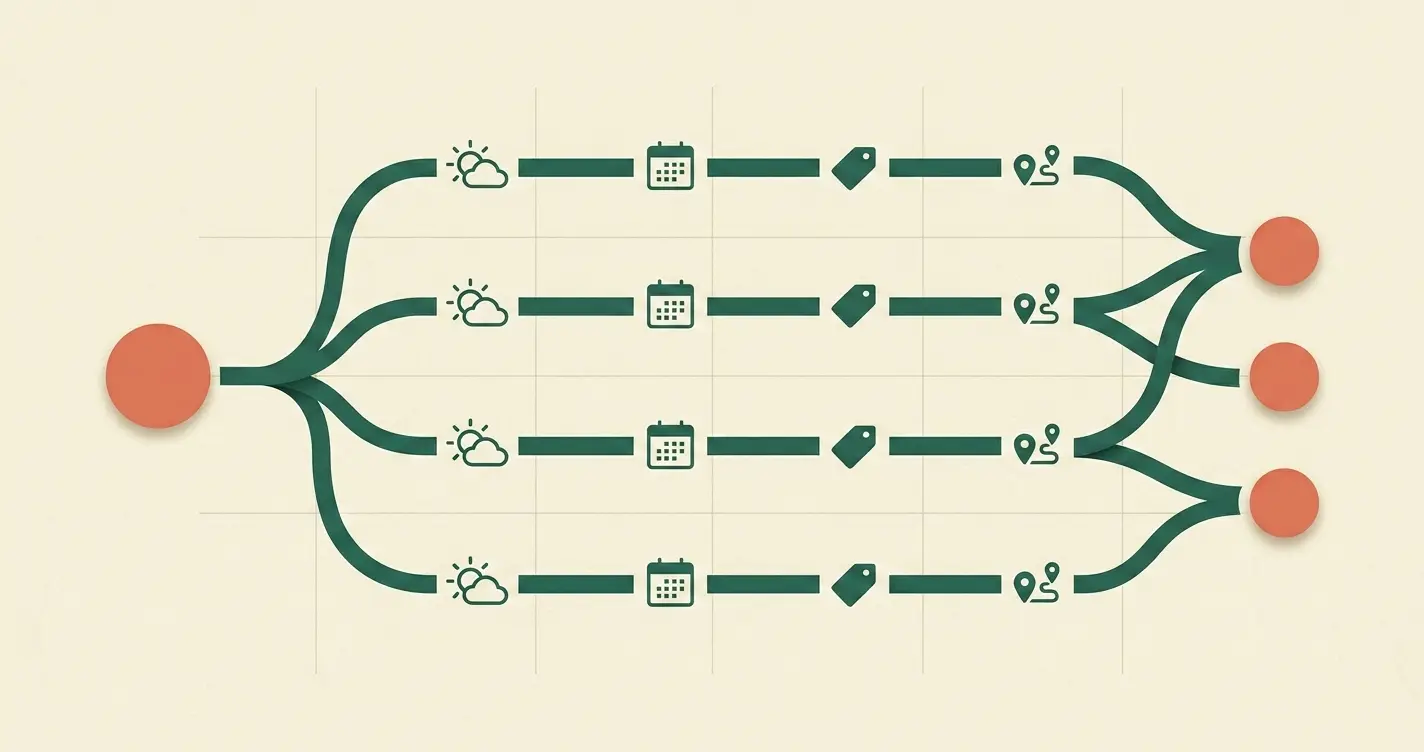
From that starting point, our system analyzes routes, seasonal weather, travel demand, and pricing patterns. The goal is simple: suggest destinations that are actually good to visit right now or in the near future.
Rather than browsing endless options, you see trips that already make sense for the season.
Optional filters let you adjust the experience. Some travelers prefer the fastest routes regardless of price. Others want to minimize hotel nights or avoid complicated transfers. These preferences can shape the suggestions you receive.
The platform also remembers your settings and previously visited places. Over time, it becomes easier to discover destinations you haven’t explored yet and plan trips months in advance.
Travel planning without giving away your life story
There is another growing concern in modern travel tools: privacy.
Many AI assistants already know a surprising amount about their users—from questions asked to personal preferences and habits. Feeding them detailed travel histories can add another layer of personal data.
Our platform takes a different approach. You can store your preferences and visited destinations for better recommendations, but your travel planning doesn’t have to become part of a large personal data profile.
You keep control of what information you share.
Let the season guide the destination
The world always has incredible places worth visiting. The real trick is finding the ones that are perfect right now.
Instead of spending hours researching weather charts, price trends, and seasonal guides, start with your departure point and explore destinations that fit the moment.
Sometimes the best trip is not the place you had in mind—it’s the one that the season quietly recommends.